RoboSub 2026 · Current vehicle
ORCA
ORCA is our 2026 autonomous underwater vehicle. It builds on Krabby Patty with a redesigned claw, dropper, and torpedo, a safer power and kill-switch architecture, and a ROS 2 software stack that uses two ZED 2i stereo cameras and YOLO26 object detection for both perception and localization. Every design choice this season aimed at one thing: a reliable, modular vehicle that scores points consistently in the competition pool.
The mission
What ORCA has to do
RoboSub is an international competition run by RoboNation where student-built submarines complete an underwater obstacle course with no human control. Once the vehicle is in the water, it has to find each task with its own cameras and decide what to do on its own. Time in the pool is limited, so we ranked the 2026 tasks by how reliably we can score them.
- 1
Begin Assessment
Task 1
Light on logic and movement, so it is the most reliable source of points.
- 2
Recon
Task 3
Drop markers into bins. The new dropper was designed specifically for this task.
- 3
Resupply
Task 5
Main target for the claw; needs mechanical and software systems working together.
- 4
Avoid Debris
Task 2
Depends heavily on precise localization in a changing pool environment.
- 5
Torpedoes
Task 4
Needs accurate aiming plus the new electric torpedo firing on command.
- 6
Return Home
Task 6
Relies on the vehicle knowing where it started after a full run.
At a glance
Specifications
- Onboard computer
- NVIDIA Jetson Orin Nano
- Runs detection, localization, and mission planning
- Flight controller
- Pixhawk PX4
- Driven over MAVLink via MAVROS
- Cameras
- 2x Stereolabs ZED 2i
- Forward + downward, 1080p @ 30 fps, 120 mm stereo baseline
- Navigation sensors
- ZED 2i IMU, barometer, magnetometer
- Visual SLAM + IMU odometry replaces last year’s DVL
- Power
- 14.8 V LiPo
- 2x Blue Robotics 10 Ah packs, 4x Turnigy 5000 mAh 4S packs
- Power rails
- 12 V thrusters, 2x 7.125 V servos
- Buck-regulated on a custom high-power board
- Frame
- 6061 aluminum
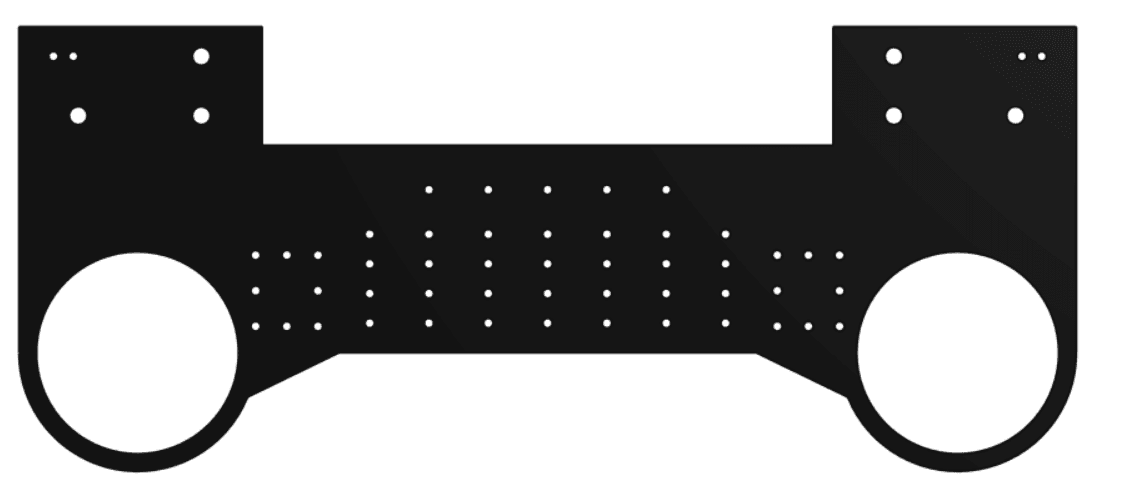
- Modular bottom plate with a hole grid for mounting tools
- Main compartment
- Clear acrylic enclosure
- 1 camera window, 20 penetrator ports
- Software
- ROS 2 Humble
- YOLO26, ZED SDK, Nav2, OpenCV, PyTorch, Pymavlink
- Manipulators
- Claw, dropper, torpedo
- Compliant PLA/TPU claw, two-barrel dropper, self-propelled electric torpedo
- Fabrication
- In-house
- Frame machined from aluminum; tools 3D printed in PLA and TPU
- Team
- 17 students
- 8 mechanical, 3 electrical, 6 software
Mechanical design
Mechanical
The mechanical goal for ORCA was reliability and modularity. The frame and main compartment are machined from 6061 aluminum; custom tools are 3D printed in PLA and TPU so they can be iterated quickly.
Frame and mounting plate
The bottom panel carries an array of holes so tools like the claw and torpedo launcher can be mounted, moved, and swapped without new parts.
- Machined from 6061 aluminum
- Hole grid lets subsystems be repositioned as testing reveals better layouts
- Designed so the frame can be reused on future vehicles
Main compartment
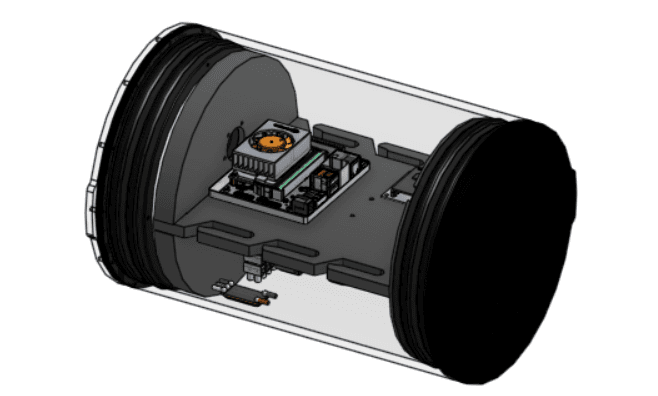
The electrical bay holds the Jetson, Pixhawk, and power electronics in a clear acrylic enclosure on a custom 3D-printed electronics tray.
- One window for camera visibility and 20 ports for cables and future sensors
- Switched back to an off-the-shelf acrylic tube after waterproofing quality issues with 2025’s custom welded enclosure
- Tray was reprinted after pool trials to keep the Pixhawk and ZED 2i sensors aligned
Claw
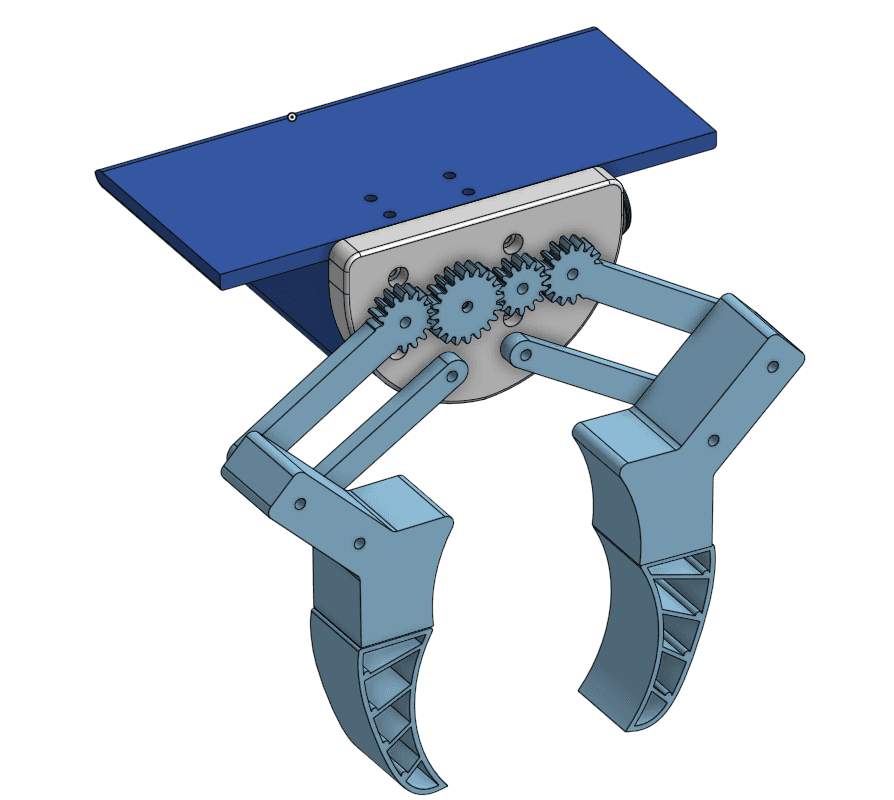
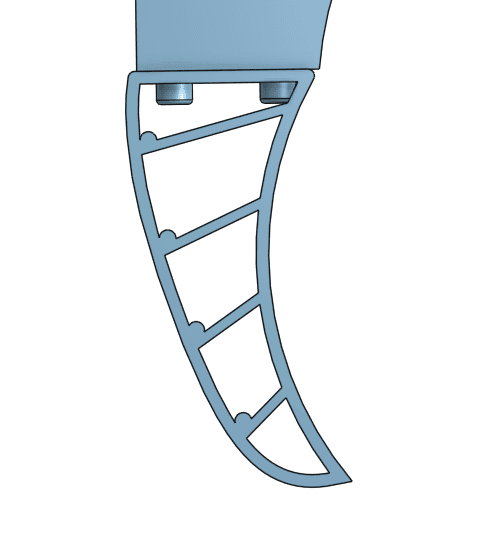
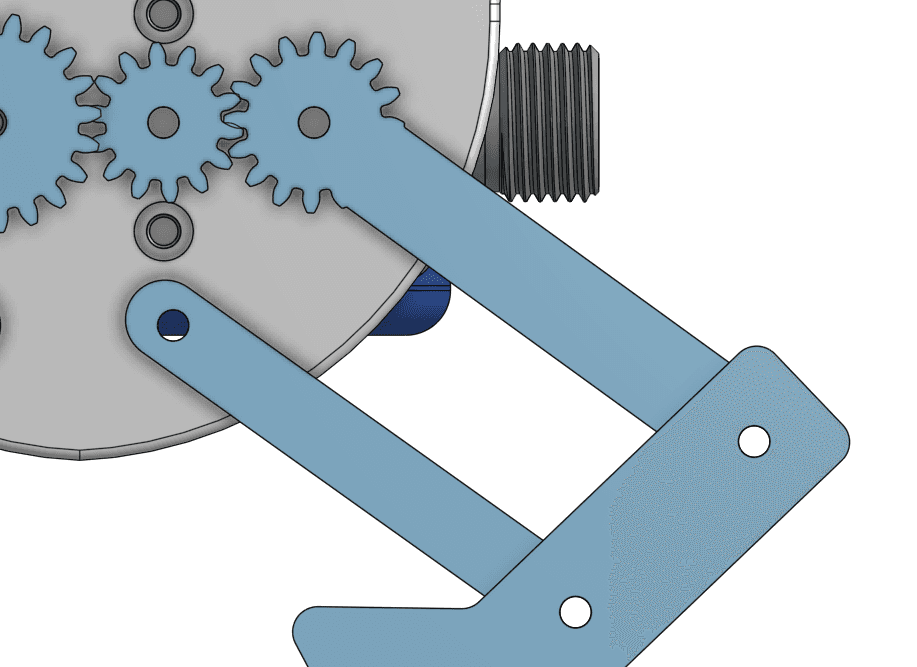
2025’s 1:1 gear train did not transfer enough torque to hold objects. ORCA uses a hybrid compliant claw: rigid PLA for structure and flexible TPU fingers that conform to what they grab.
- Compliant TPU fingers chosen over printed "bristles", which were hard to print and wasted support material
- Four-bar "double-joint" linkage keeps the fingers parallel as they close
- Four-gear series train with an idler gear turns the two arms in opposite directions (a worm gear was ruled out by the servo’s rotation limit)
- Gear plate sits flush on the servo face with countersunk fasteners
Dropper
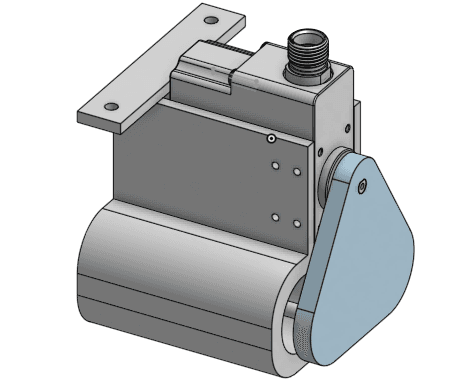
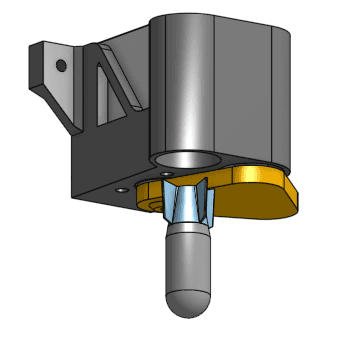
Last year the dropper and torpedo shared one servo and a rotating barrel. For 2026 they are separate: a simple two-barrel dropper with cover plates, inspired by Delhi Technological University’s LAPRAS 2.0.
- SER-2010 servo releases markers for the Recon (Bins) task
- Markers fall aligned with the planned path instead of perpendicular to it
- V1 used a 6 mm guide rod and finned markers; V2 adds a compartment for steel weights so markers drop quickly
- Markers went through five iterations (see Testing below)
Torpedo
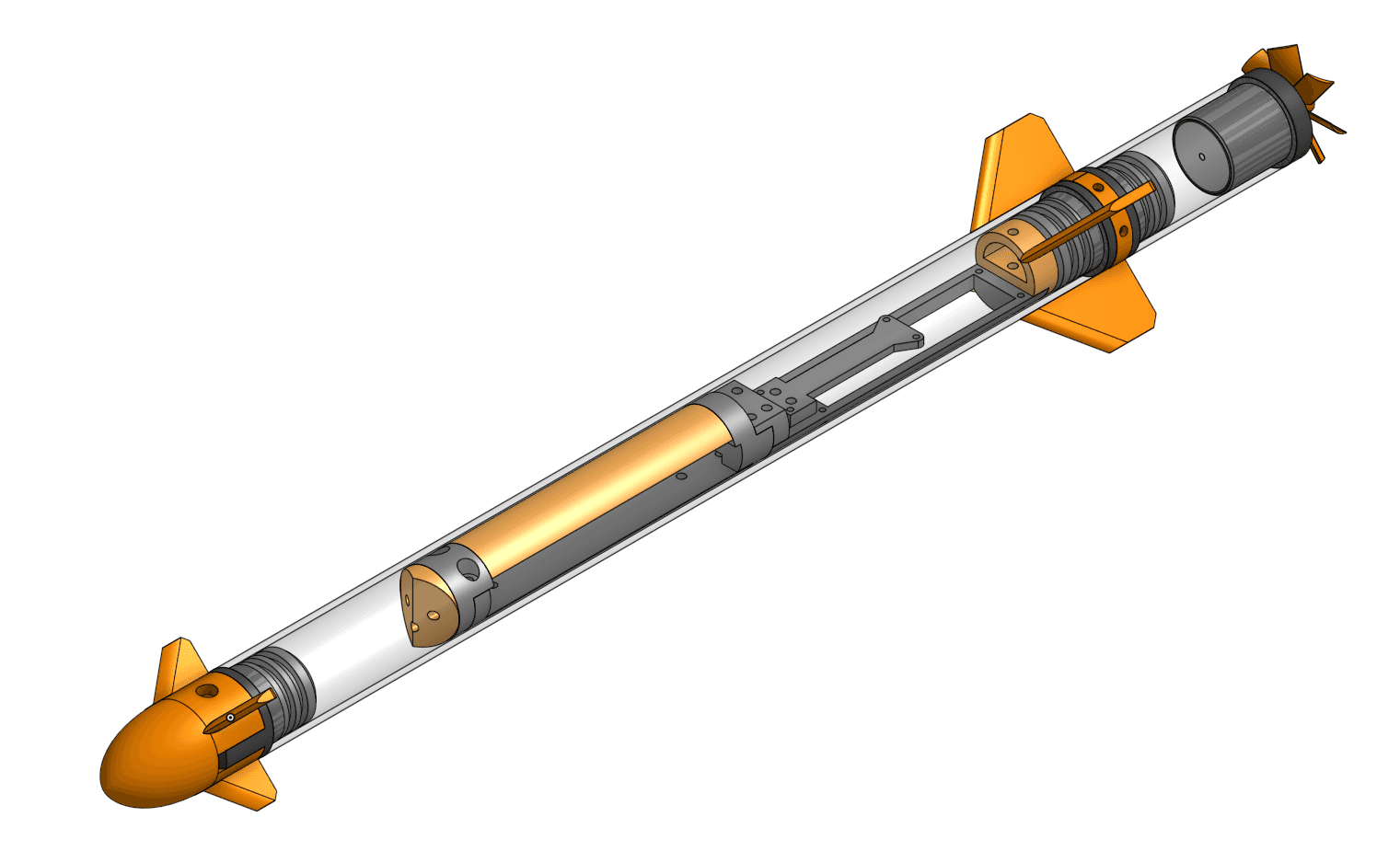
The spring-loaded launcher was unreliable, so ORCA moves to a self-propelled electric torpedo. A small DC motor spins a propeller, and a microcontroller with a photoresistor reads binary-encoded fire signals flashed by an LED on the vehicle.
- First proof-of-concept was 18 in long, built from readily available materials
- Later versions shrink it toward regulation size and test different hull materials
- No off-the-shelf watertight brushless motor fits at this scale, so we built a custom watertight hull around a brushed DC motor
Electrical design
Electrical
The electrical subteam focused on safety and faster debugging: clean power distribution, protection against surges, and a kill switch that reliably stops the vehicle.
Power distribution and kill switch
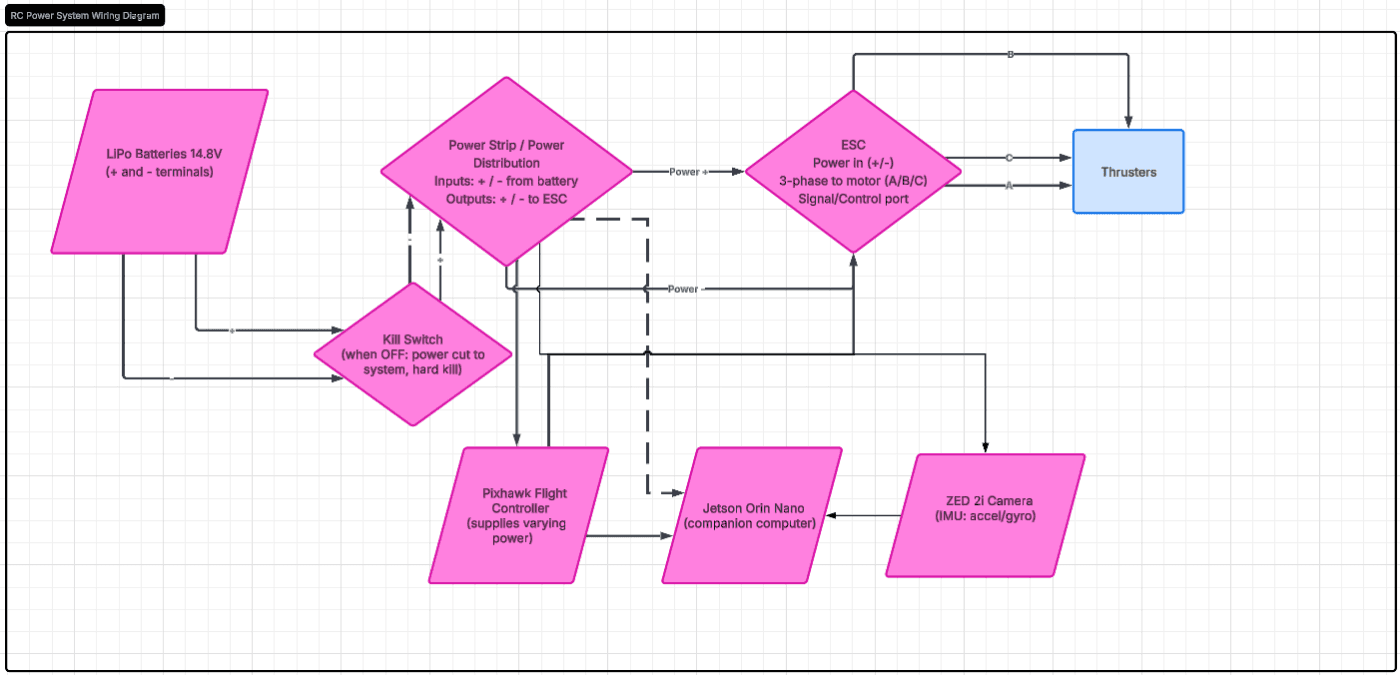
A custom high-power board routes power from the 14.8 V LiPo batteries to everything that moves. The waterproof kill switch cuts this board directly, stopping all thrusters and actuators at once.
- Two buck converters give two independent 7.125 V servo rails; a separate buck regulator supplies a stable 12 V thruster rail
- A 555 timer-driven precharge circuit switches a high-current relay through a MOSFET to stop the inrush current that hurt an earlier board
- Diode array for overvoltage protection; screw terminals for fast repair
- A hard kill forces every subsystem to re-initialize cleanly, which makes sensor desyncs and software deadlocks easier to isolate
- IP67 inline kill switch rated 12–24 V, 20 A
Software design
Software
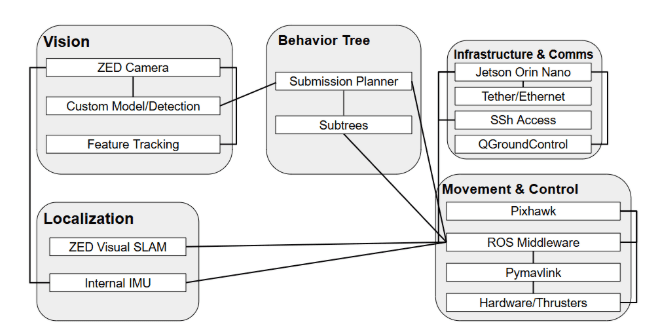
The software stack runs on ROS 2. Specialized processes talk over publish/subscribe topics, from high-level mission planning all the way down to thruster PWM.
Architecture and control
MAVROS bridges ROS 2 and MAVLink so the Jetson can command the Pixhawk PX4. A PID loop uses IMU data to adjust the PWM signals sent to each thruster.
- Detection node: runs YOLO26 and publishes 3D bounding boxes and object positions
- Localization node: tracks position relative to the start, and can load or build pool maps with Nav2
- Behavior tree node: makes high-level decisions from mission goals and sensor data
- Control node: turns behavior-tree decisions into motion commands sent to the Pixhawk over MAVLink
Vision and localization
Two ZED 2i stereo cameras, one facing forward and one facing down, provide depth maps, 6-DoF tracking, and tracking of fixed floor markers. That gives us perception and localization from one sensor family.
- Dropping the DVL simplified the stack a lot, at the cost of a small drop in localization accuracy
- Two-stage intercept: first re-center the target in the front camera at matching depth, then use stereo depth to estimate its 3D position and hand it to the behavior tree
- Moved model inference from ONNX Runtime to TensorRT after the camera pipeline fell to ~0.5 fps on the Jetson
Design decisions
What changed from Krabby Patty
ORCA keeps what worked on our 2025 vehicle (the modular aluminum frame, ZED 2i cameras, Jetson Orin Nano, and ROS 2 stack) and replaces the parts that held us back.
| Area | 2025: Krabby Patty | 2026: ORCA | Why |
|---|---|---|---|
| Claw | Rigid claw, 1:1 series gears | Hybrid compliant PLA + TPU claw | Old claw could not grip with enough force |
| Dropper + torpedo | Combined on one servo and rotating barrel | Two separate subsystems | Combining them caused backlash and inaccurate markers |
| Torpedo | Spring-loaded launcher | Self-propelled electric torpedo | Springs launched inconsistently |
| Main compartment | Custom welded aluminum box | Off-the-shelf acrylic enclosure | Custom box had waterproofing quality issues |
| Object detection | YOLOv8 | YOLO26 | Faster detection for quicker task completion |
Validation
Testing
Every subsystem is tested on its own before it goes on the vehicle, then again in the pool. Results come from our tests so far; protocols are the procedures we use for subsystems still being validated.
Marker drop tests
Recon (Bins) points come down to consistency, so each marker version was dropped in a ~6 ft pool and its path checked against a metal rod.
- V1: fully 3D printed, not dense enough to sink
- V2: added a 14 mm 316L steel bearing, but without fins it drifted
- V3–V4: experimented with helical fins
- V5: straight screw-in fins plus a second bearing. Most consistent version, adopted as final
- Accuracy test (10 drops onto a ringed target): 7 in the inner 50 cm ring, 2 in the 150 cm ring, 1 on the boundary between them
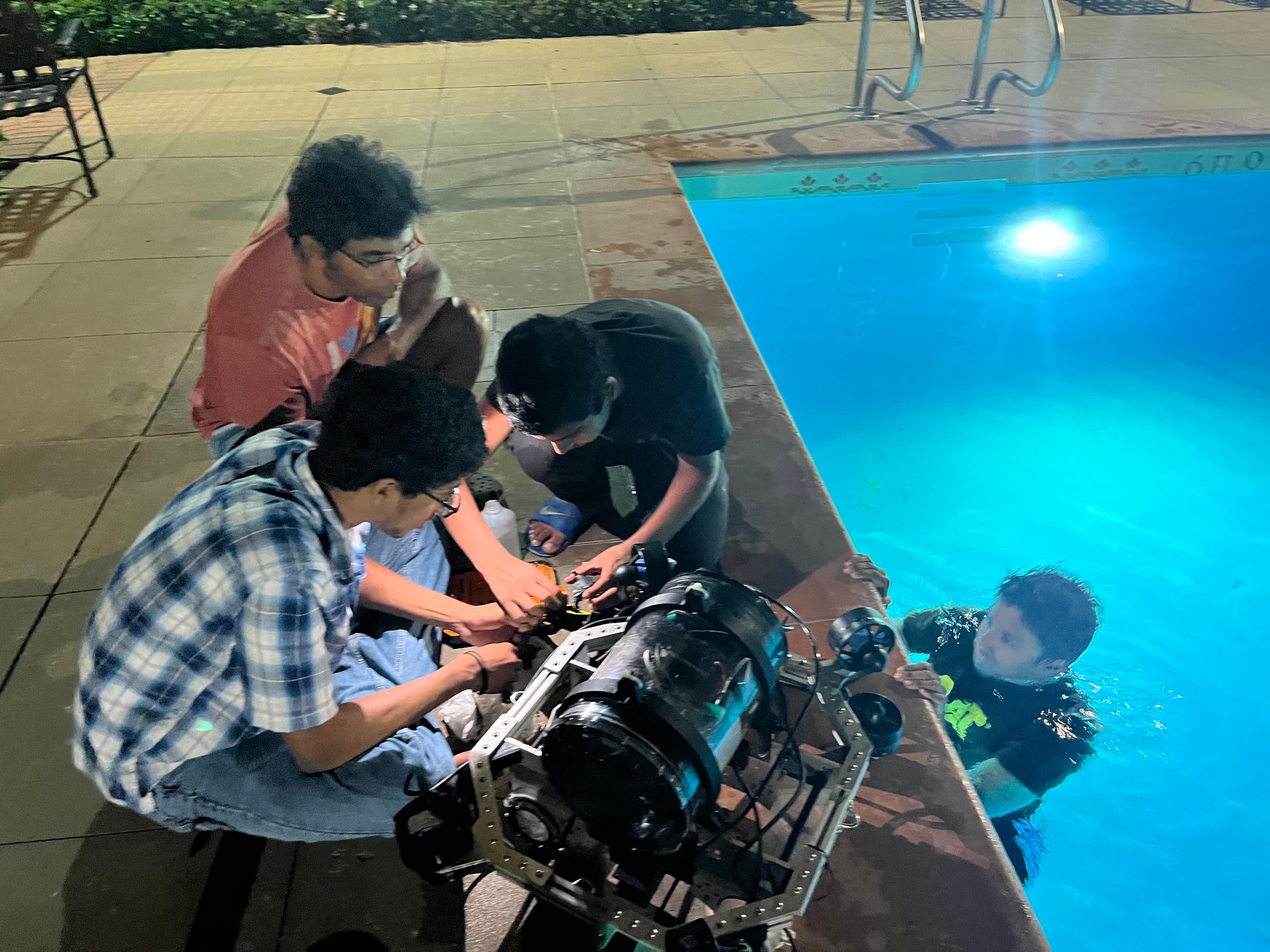
Second pool trial (July 2026)
Leak checks and movement scripts (depth hold, surge, strafe) on the full vehicle.
- Hull passed the initial leak check with no water inside
- A surge command sent the vehicle down and left: the Pixhawk and ZED 2i were misaligned, so their motion sensors disagreed
- An overtightened kill switch let water into the battery compartment
- Fixes: two layers of epoxy on the kill switch, and a reprinted electronics tray to lock sensor alignment
Vision latency
The camera pipeline targeted 720p @ 60 fps but ran at roughly 0.5 fps on the Jetson Orin Nano.
- Profiled both the model runtime and the model itself
- Moved inference from ONNX Runtime to TensorRT, which is built for GPU inference speed on NVIDIA hardware
Claw tests
Strength and shape tests, run on land and then repeated underwater.
- Strength: lift a 1 lb object, shake it, add 1 lb at a time until the claw lets go
- Shape: grip a circle, square, hoop, handle, and hexagon and record which hold
Torpedo accuracy tests
Aim at a target, fire, and measure the miss distance.
- 10 shots per configuration, each miss distance recorded
- Same procedure used for the dropper accuracy test
Video
RoboSub 2026 team video
Want every detail?
The 2026 Technical Design Report includes full CAD drawings for the claw and dropper.